
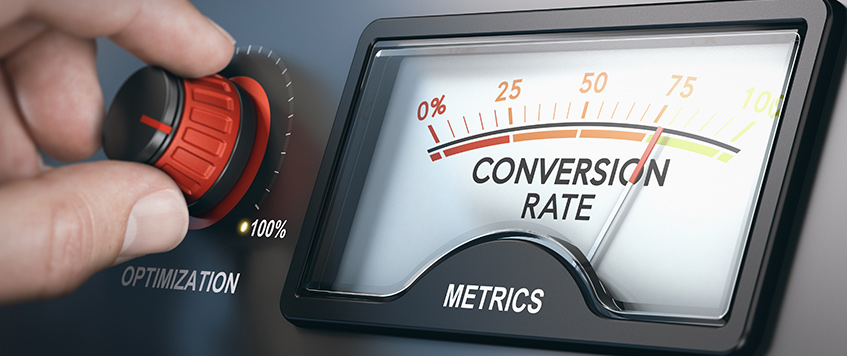
Traffic without sales is the most expensive problem in retail. You can send thousands of visitors to your e-commerce website and still watch most of them leave with an empty cart. The gap between a click and a completed order is where profit lives, and closing it is a skill you can learn.
Shoppers rarely abandon a purchase for one reason. They hesitate because a photo looks cheap, a page loads slowly, or the checkout asks for details they were not ready to share. Fix those friction points and the same traffic starts paying for itself.
This guide walks through eight practical moves that lift your conversion rate, along with the reasoning behind each one so you can adapt it to your own store. Some tips speak to how a buyer feels in the moment, and others speak to the rewards that push them over the line.
Redberries builds and optimizes online stores for brands across the UAE and beyond. As an eCommerce development Company in Dubai, the team handles design, speed, payment integration, and the testing work that turns browsers into buyers. If you would rather focus on your products than your page load times, Redberries can take the technical side off your plate.
Why buyers hesitate, and what actually moves them
Every purchase decision runs on two engines. There are intrinsic motivations, the internal ones, such as feeling confident about a choice, trusting the seller, and the quiet satisfaction of solving a problem. Then there are extrinsic motivations, the external ones, like a discount, free delivery, a five-star review count, or the fear of missing a limited stock item.
Strong stores answer both. A crisp product photo calms the anxiety of buying something unseen, which is intrinsic. A visible “1,200 sold this month” badge supplies social proof, which is extrinsic. When you design for the feeling and the reward at once, e-commerce conversion optimization stops being guesswork and starts following the way people actually decide.
1. Use high-resolution images
Buyers cannot touch what you sell, so your images do the touching for them. Grainy or poorly lit photos plant doubt, and doubt kills carts.
Replace stock-quality shots with sharp, zoomable images from several angles. Show the product in use, show scale, and show the details a shopper would inspect in a physical store.
2. Add product videos
A short video answers questions text never quite covers. It shows how a fabric drapes, how a gadget switches on, or how big a bag really is.
You do not need a studio. A clean thirty-second clip filmed on a phone often lifts confidence enough to move a hesitant visitor toward checkout.
3. Offer free shipping
Shipping cost is the single most common reason carts get abandoned. A visitor who felt ready to buy sees a delivery fee at the last step and quietly leaves.
Free shipping removes that shock. If the margins scare you, build the cost into the product price or set a minimum order threshold, which also nudges people to spend more.
4. Deliver a genuinely good user experience
Walk your own store like a first-time customer. Can you find a product in two clicks, read clear return terms, and check delivery timelines without hunting?
Every point of confusion is a point of exit. Clean navigation, honest information, and a logical flow from homepage to thank-you page do more for maximize e-commerce conversions than any single flashy feature.
5. Make the site responsive on mobile
Most of your visitors arrive on a phone, and Google now ranks mobile-first. A layout that looks fine on a laptop but breaks on a small screen loses those buyers before they even see your products.
Test every template on real devices. Buttons should be thumb-friendly, text readable without pinching, and the checkout just as smooth as it is on desktop.
6. Speed up your pages
People abandon slow pages in seconds, and Google reads that impatience through Core Web Vitals. Each extra second of load time chips away at your sales and your search ranking at the same time.
Compress images, trim heavy scripts, and use reliable hosting. Faster pages create a smoother path to purchase and directly increase online sales without you spending a dirham more on traffic.
7. Write better product descriptions
A shopper who leaves your page to answer a question rarely comes back. Your description should close every gap before it opens.
Cover materials, sizing, care, compatibility, and anything a buyer might worry about. Write for the person, not the search engine, and let the details do the persuading. Sharpening descriptions is one of the cheapest routes to real conversion rate improvement.
8. Simplify the checkout
The last step should feel effortless. Every extra field, forced account signup, or surprise cost gives a ready buyer a reason to reconsider.
Offer guest checkout, show trusted payment badges, and cut the process to as few steps as possible. A clean, secure checkout protects the sale you already earned and helps boost e-commerce performance across the whole funnel.
Treat optimization as an ongoing habit
None of these fixes is one and done. Small, steady tests reveal what your specific audience responds to, and the winners compound over time.
This is the discipline behind e-commerce CRO (conversion rate optimization): change one thing, measure it, keep what works, and repeat. A store that improves a little every month outpaces one that gets a single redesign every three years.
Start with the tips that match your biggest leak. If most shoppers drop at checkout, fix that first. If they never add to cart, focus on images and descriptions. Redberries works as a full-service Digital Marketing Agency In Dubai, so the same team that builds your store can also drive the qualified traffic that makes these improvements pay off.
Frequently asked questions
How long does it take to see results from e-commerce conversion optimization?
Some changes, like fixing a broken mobile checkout, show results within days. Others, such as refining product pages, need a few weeks of traffic before the data is trustworthy. Treat it as a rolling process rather than a one-time project, and expect steady gains rather than an overnight jump.
What is a good conversion rate for an online store?
Most e-commerce stores convert between one and three percent of visitors, though it varies by industry, price point, and traffic source. Rather than chasing a universal benchmark, measure your own baseline and work to beat it month over month. Consistent improvement against your own numbers matters more than any published average.
Should I hire an agency or handle conversion work in-house?
If you have the time and technical skill, many of these tips are doable in-house. When speed, payment integration, or site performance become bottlenecks, an experienced partner saves months of trial and error. A team that has optimized dozens of stores already knows which fixes tend to move the needle for businesses like yours.