
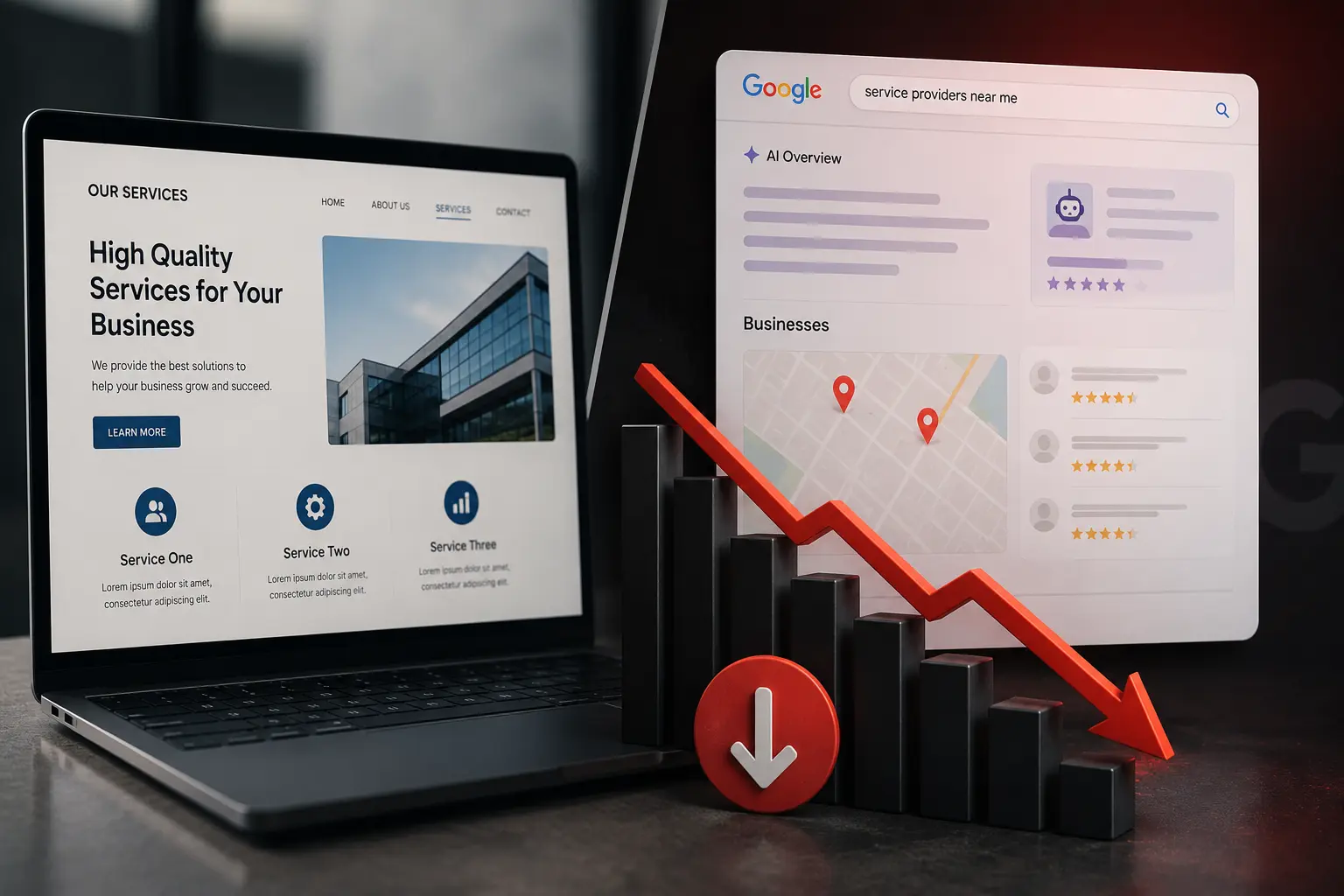
Something changed.
If you’ve been running a business online for a few years, you probably noticed it too. Pages that used to sit comfortably on page one started slipping. Traffic dropped. Leads slowed. And nothing obviously went wrong. You didn’t get penalized, didn’t lose backlinks, didn’t change anything on the site.
That’s the confusing part. The page didn’t fail. Google just stopped caring about it.
Here’s what actually happened.
The Old Formula Stopped Working
For a long time, the recipe was simple. Pick a keyword. Write 500–800 words around it. Add your city name a few times. Put your phone number at the top. Done.
That worked. Not because it was a good strategy but because most competitors were doing even less. The bar was low, and showing up was enough.
That bar is gone now.
Google’s gotten much better at reading pages the way people do. It’s not just checking if your keyword appears. It’s asking: does this page actually help someone make a decision? Does it answer what they came here to find out? Or is it just… there?
Most service pages fail that test. They describe the company. They list services. They say “we’re passionate about what we do.” And then they stop.
There’s no substance. No specificity. Nothing that separates one page from another.
What Google Is Looking For Instead
Think about what a user actually wants when they land on a service page. They want to know if you can solve their specific problem. They want to know how you work, what the process looks like, and whether you’ve done this before for someone like them.
A homepage-style paragraph about your team doesn’t answer that.
This is especially true in competitive markets. If you’re a website development company in Oman, you’re not just competing locally anymore you’re competing with every generic agency site that uses the same template, the same stock photos, the same headline.
The pages that rank now are the ones that actually give Google something to work with. Real detail. Specific outcomes. Genuine insight into the service itself.
Thin Content Is the Core Problem
Most service pages are thin. Not thin in word count, some are 1,000 words long and still say almost nothing.
Thin means vague. It means you could swap out the company name and use the same page for any competitor. It means someone reads it and still doesn’t know what to expect if they hire you.
Google can tell. And users definitely can.
If you offer digital marketing services Oman businesses actually need, your page should reflect that. It should speak to the local context what kinds of businesses you’ve helped, what the market looks like, what challenges come up. That’s what makes a page worth ranking.
What Actually Works Now
The pages performing well now do a few things differently.
They answer questions. Real ones the kind clients ask before they ever pick up the phone. What does a project cost? How long does it take? What happens if something goes wrong?
They get specific. Not “we build beautiful websites.” More like: here’s the kind of site we built, here’s why we made those decisions, here’s what changed for the client.
They match search intent. Someone searching for a website design service in Oman isn’t necessarily ready to buy, they’re comparing options, trying to figure out who knows what they’re doing. Your page needs to show that, fast.
And they’re built for the reader first, not the algorithm.
The Bottom Line
Service pages didn’t stop working because of some algorithm update or technical penalty. They stopped working because the internet got more competitive and users got more skeptical. The page ranking today earned it. They give people a reason to stay, a reason to trust, and enough information to actually take the next step.