
My client called me last Tuesday, a little panicked.
She runs a small skincare brand here in Riyadh. Her website was fine. Pretty, fast, simple to use. But she’d asked ChatGPT about the best vitamin C serums, and her products were nowhere. A competitor with an uglier site? Mentioned three times.
That call stuck with me. She wasn’t wrong to be confused. For years we told her the rules: nice design, fast loading, the right keywords. She did all of it. And then the rules changed under her feet.
Here’s the thing nobody really announced. People aren’t just typing into Google anymore. They’re asking AI tools full questions and reading the answer. No clicking, no scrolling through ten blue links. The AI reads the web, picks what it trusts, and hands over a summary.
So the question becomes: how does an AI decide your site is worth quoting?
It reads structure, not just looks
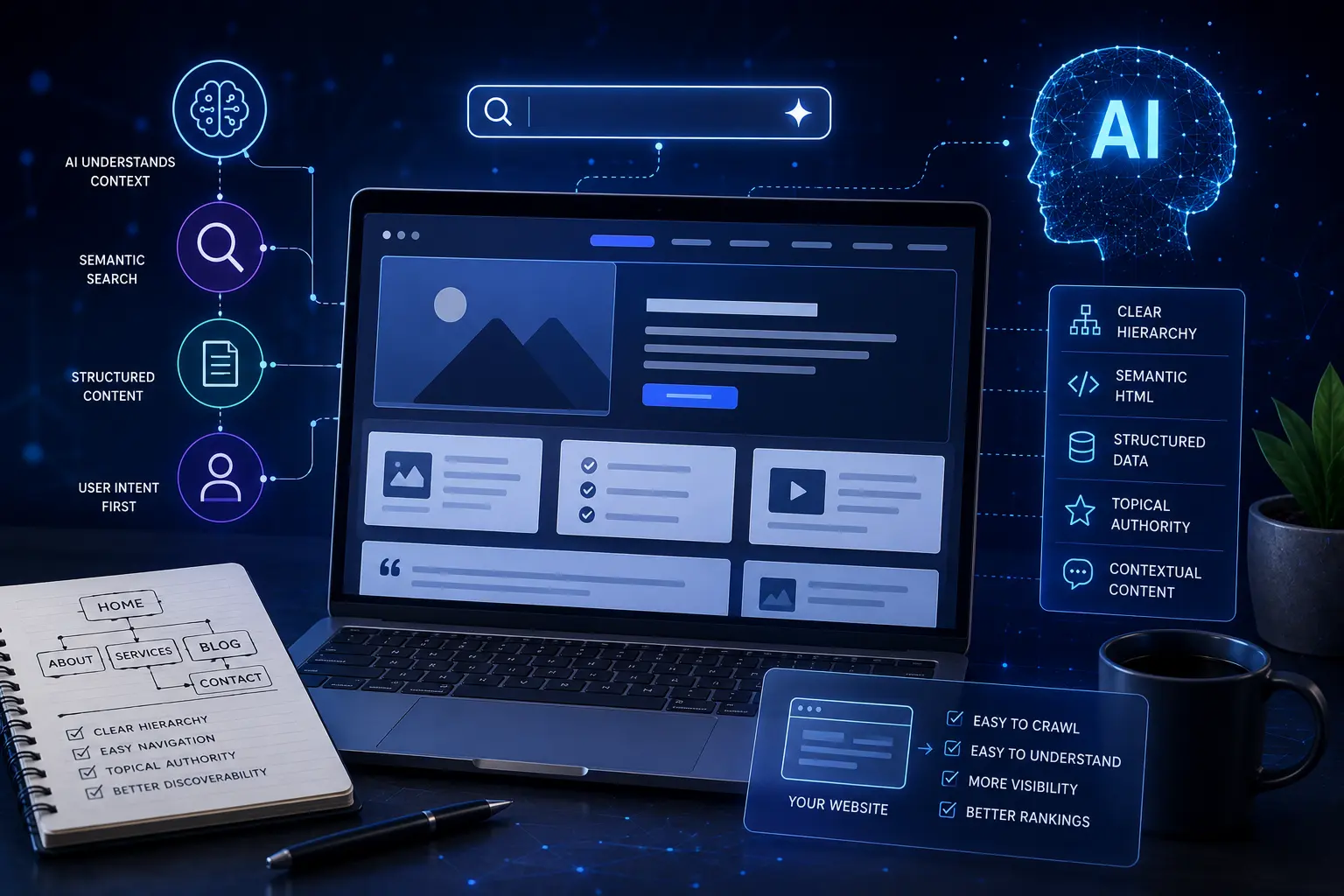
A human visitor sees your homepage and thinks “oh, nice.” An AI doesn’t care about nice. It cares about whether it can understand your page in plain terms.
It wants clear headings that actually say what the section is about. It wants short answers near the top, not buried under three paragraphs of story. It wants your contact info, your prices, your service list written out clearly instead of stuffed inside a pretty image it can’t read.
Think of it like this. If a stranger skimmed your page for ten seconds, could they explain what you do? If yes, the AI probably can too.
A lot of the web development Saudi businesses paid for over the last five years was built for the eye. Big sliders. Fancy animations. Text trapped inside graphics. Looks great. Useless to a machine trying to understand you.
Questions beat keywords now
Old way: cram in the keyword “best dentist Jeddah” twenty times and hope.
New way: Write your content to answer the specific question that people may ask, in clear language. When you do this, the AI starts seeing you as a source it can pull from.
I keep telling people this isn’t some trick. You’re just writing like a helpful person instead of writing for a robot. Funny how that works out.
Small things that matter more than they used to
A few quiet changes I’ve watched make a real difference:
Clean code under the hood. Messy pages confuse the bots. A good website development company Saudi teams trust will build the structure properly from the start, so the content is easy to read for both people and machines.
Real answers in your text. Don’t hide your knowledge. Say it plainly on the page.
Consistent information everywhere. Your business name, address, hours, on your site and across the web. AI cross-checks. If your details clash, it trusts you less.
None of this is glamorous. It’s plumbing. But plumbing is what decides whether you show up when someone asks.
So what did I tell her?
I told her to stop panicking, first. Her site wasn’t broken. It was just speaking the wrong language to the new audience reading it.
We rewrote her product pages in plain words. We pulled key facts out of images and put them in actual text. We added a short FAQ that answered the stuff people genuinely ask. Boring work. It took two weeks.
She got her first AI mention about a month later. One. Then a few more. Slow, but moving.
If your business sits in this market, this shift is already happening whether you watch it or not. Pairing solid build work with a digital marketing company in Saudi that understands how these AI tools actually read content gives you a real head start. Most of your competitors haven’t noticed yet.
That’s the quiet advantage here. The rules changed, sure. But hardly anyone’s playing by the new ones.
So you can.
Start with one page. Write it like you’d explain your business to a friend. Then check if the machines start listening too.
They usually do.