
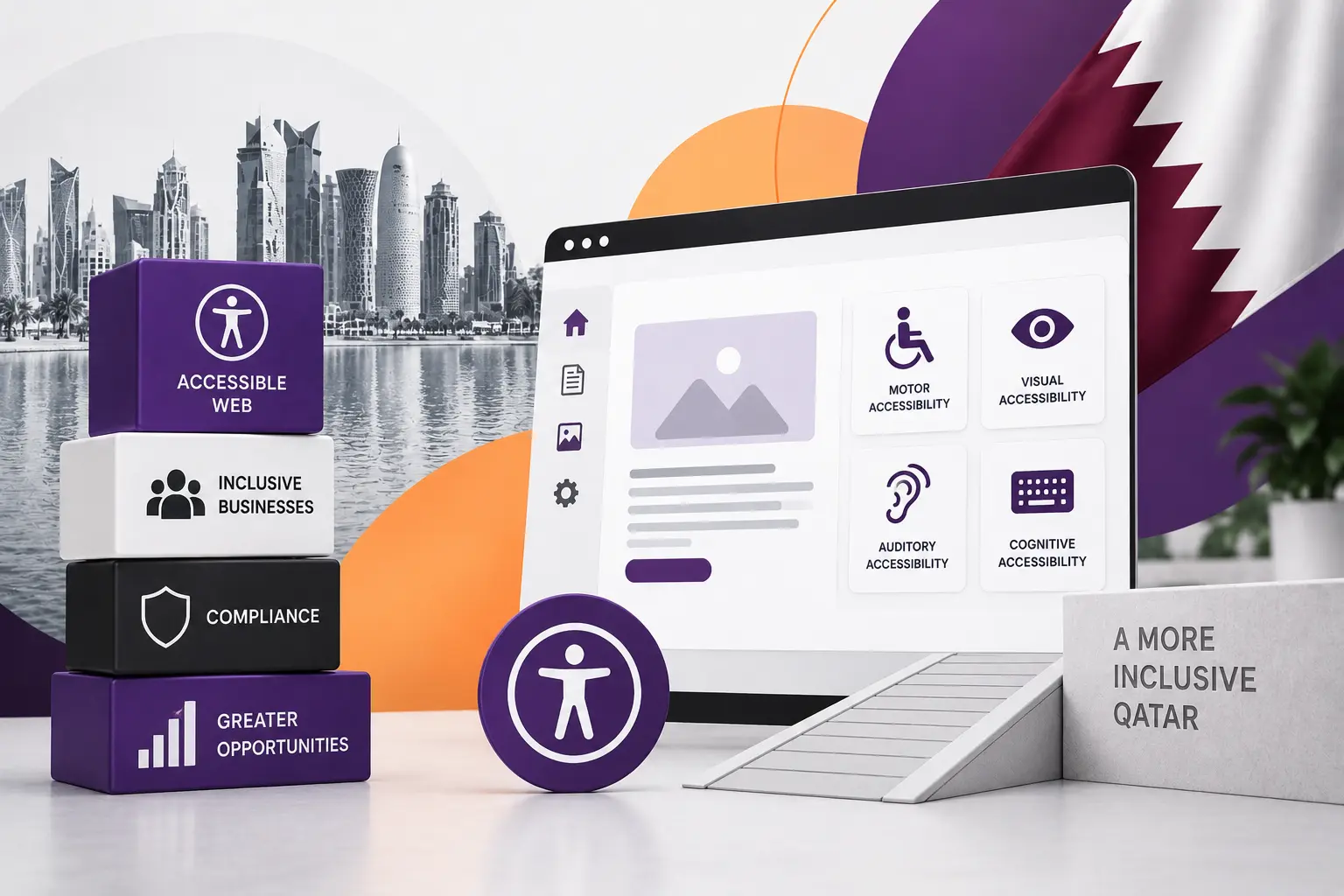
Qatar is evolving digitally at an exponential rate because of Qatar National Vision 2030 and Mada Assistive Technology Center. As local firms evolve digitally, they must appreciate the importance of matching Qatar’s National Vision 2030 and internationally legislated web accessibility standards like the WCAG 2.1 AA, and also meet e-accessibility obligations effectively. This will enable firms to serve diverse stakeholders. Your website must meet accessibility standards and offer seamless navigation through the services offered to individuals with functional limitations. An investment in an experienced website development company Qatar is worth the resource commitment and will safeguard your brand reputation and broaden the target market in the fiercely competitive regional business environment.
Core Pillars of Mada and WCAG Compliance for Qatari Platforms
The use of web-based technologies and digital resources is predicated upon the design and development of web services that can be used by assistive technologies, high-contrast browsers, and offer alternative digital input methods. Doha-based businesses must also facilitate navigation using only the keyboard and offer a clear and defined heading hierarchy to address the user experience of those with motion impairment. Working with a reputable web development company Qatar offers organizations the ability to conduct examinations of their digital offerings and address shortfalls in web accessibility. This brings about the goal of offering unimpeded access to all blind, low-vision, and hearing-impaired users.
Enhancing User Assistance Through Intelligent Interfaces
Many frameworks that rely on accessibility are no longer just about designing interfaces that meet certain standards; they also focus on the interactive aspect and complementing design with interactive communications. An example of this would be a screen-reading AI chatbot integration that helps users place orders on a menu by answering simple, direct questions in natural language, instead of having to navigate a complex menu. There are many real-world examples of how custom assisted users with complex, dynamic systems. These examples show how compliance is just one part of how companies can design their digital systems, and how important it is to design systems that are actually functional and help people who will be using them.
Comparing Standard Web Design with Accessible Digital Architecture
Evaluating digital requirements involves understanding the operational shift between traditional visual builds and accessible web structures. The table below illustrates how accessible platform design supports commercial enterprise goals in Qatar.
| Accessibility Criteria | Standard Digital Build | Compliant Enterprise Architecture |
| Regulatory Alignment | Ignores national Mada standards, risking non-compliance and limited audience reach. | Fully aligns with WCAG 2.1 AA and National e-Accessibility directives. |
| Assistive Navigation | Relies heavily on mouse interactions and complex visual sub-menus. | Supports screen readers, keyboard shortcuts, and structured heading hierarchies. |
| User Support Tools | Features static contact forms that create input barriers for impaired users. | Deploys accessible conversational UX and structured automated support. |
| Market Coverage | Excludes users requiring screen readers, font adjustments, or contrast controls. | Engages all demographics, expanding market share across the GCC region. |
Commercial Advantages of Prioritising E-Accessibility
Accessible web design can provide commercial value even outside of expected regulatory compliance. This is because search engine crawlers crawl the web in a similar manner to screen readers, where both can differentiate between clean, semantic code, and page hierarchy to determine a design’s accessibility. Building accessible web designs, therefore, can improve Search Engine Optimization (SEO), and potentially lower customer acquisition costs in the long-term.
An organization’s commitment to accessible web design can also increase customer trust in the organization. This is particularly apparent in the business community because potential clients and potential retail customers all appreciate socially responsible organizations that prioritize web equality. This further enhances the organization’s competitive advantage in the long-term, especially when more stringent regulations regarding digital accessibility are enacted.
Final Thoughts
It is now a business requirement for organizations in Qatar to implement most widely accepted accessibility guidelines. Building accessible digital portals enables businesses to serve more customers, stay compliant with regulations and improve user experience. Building digital assets that serve business inclusively requires an ability to develop digital systems. The market is saturated with providers of website development Qatar, making it easier for businesses to adopt accessibility solutions.