
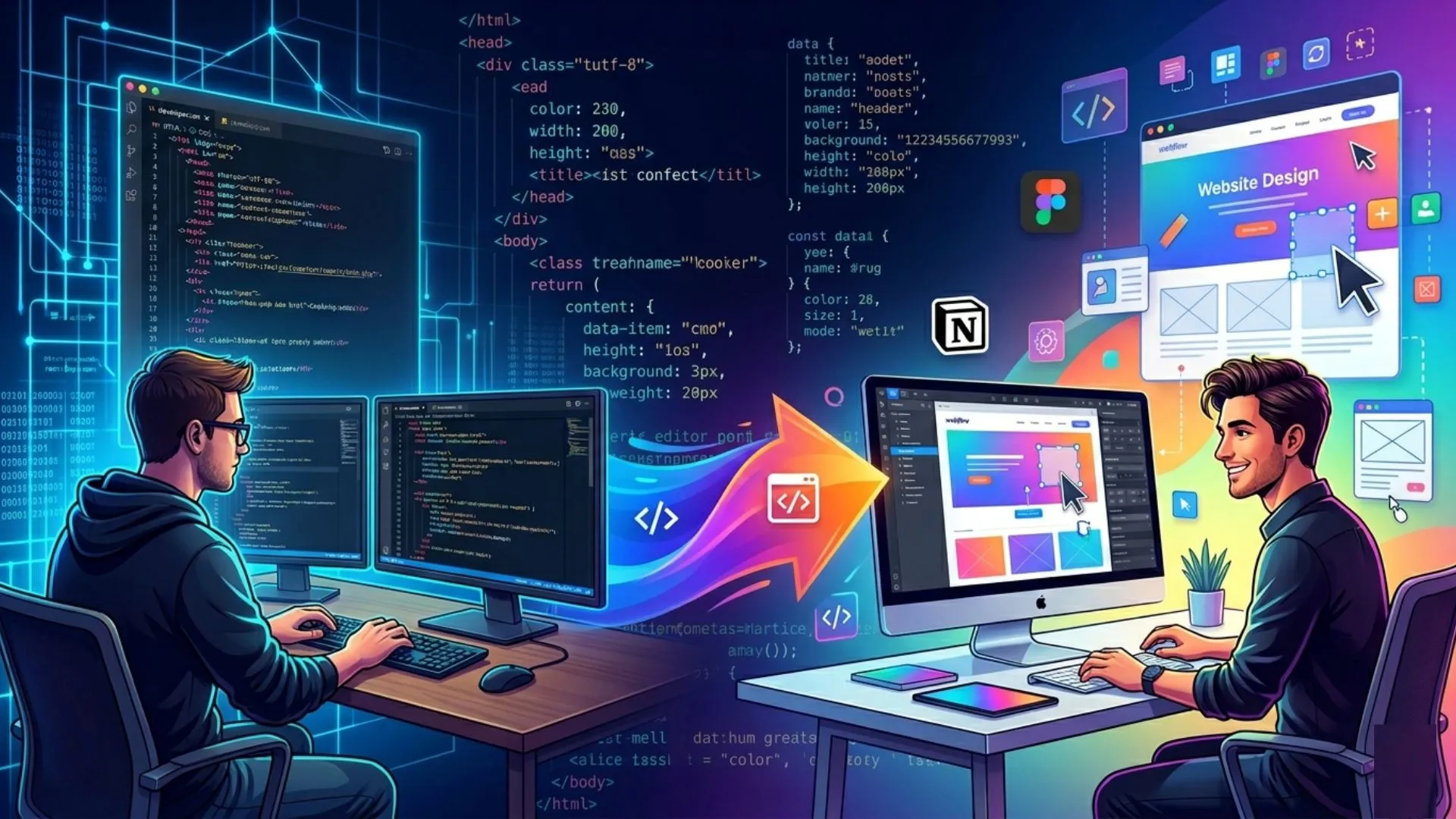
However, not too long ago, creating a professional website entailed acquiring vast knowledge about HTML, CSS, and JavaScript. For companies in the Emirates, whether it be up-and-coming startups based in Dubai’s technology industry or well-established companies in Abu Dhabi going online involves either hiring an in-house developer or investing heavily in an external specialist firm. The entry-level threshold was high, the project timeline extended, and the cost factor skyrocketed.
Now, things have radically changed. Web design UAE has experienced a paradigm shift, characterized by a massive influx of visual development software, which allows designers, marketers, and entrepreneurs to create elaborate websites while completely avoiding any coding at all. This approach is not a substitute or a fallback option; it is a revolution in terms of architecture within the web development ecosystem.
From Code First to Canvas First
The conventional method of designing websites was based on a top-down hierarchy, wherein designers created mockups and passed them along to developers, who translated the designs into functional coding languages. This methodology was iterative and efficient yet time-consuming. New brands, campaigns, product drops – everything needs digital agility to thrive. Rather than wait weeks, an independent retailer based in Dubai Media City can have its collection landing page ready within hours. Likewise, a real estate agency can make changes to its listing pages, try out a new layout for its website and conduct A/B testing for different CTA buttons without creating a developer ticket.
The Emergence of No-Code and Low-Code in the UAE
Over the last three years, there has been a sharp rise in no-code web design UAE solutions adoption. As per various digital reports from the region, the UAE remains a leader in MENA in terms of SaaS platform adoption rate, with no-code solutions not being an exception to this trend. Especially active adopters of such software have been small- to medium-sized enterprises, which remain a core part of the non-oil industry in low-code development UAE platforms dramatically reduce their dependency on expensive technical talent.
No-code refers to platforms where literally zero coding knowledge is required; the entire build happens through visual interfaces, templates, and configuration panels. Low-code, by contrast, offers a hybrid approach: a visual foundation with the option to inject custom code for more complex functionality. Both models are gaining traction among UAE businesses of every size.
For solopreneurs and small teams, no-code tools democratise web presence entirely. A traditional food brand in Deira, a consultancy in Business Bay, a wellness studio in Jumeirah all can now maintain professional, responsive, and SEO-optimised websites without a standing tech team. The power has genuinely shifted.
What Visual Development Tools Actually Offer
The best web designing tools UAE businesses are adopting today go far beyond simple templates. Breakpoint editors, CMS capabilities, animation controls, e-commerce capabilities, and performance optimizations – all of these capabilities would have required months of coding just ten years ago.
These capabilities include: real-time collaboration (more than one person working on an interface at once), SEO controls, including meta controls and schema markup, hosting with content delivery network capabilities (for faster loading across all devices), and tight integrations with various software like Hubspot, Zapier, Stripe, and Google Analytics. The outcome is a full-fledged digital operation suite, and not a mere website maker.
Importantly, such technology does not mean that we do not need to use our skills anymore. In fact, a skilled visual designer with tools such as Webflow or Framer can achieve interactions that would only be possible to create via code a while back.
The Role of the Website Design Company UAE
One of the most interesting dynamics of this shift is how it’s reshaping professional agencies. A modern-minded web design company UAE nowadays would find it wiser to develop its projects with Webflow rather than to spend time building a custom website on WordPress not out of their inability to code, but because of the fact that it’s simply a better decision to make. Visual tools allow agencies to test ideas quickly, make changes together with the client and deliver editable sites that will be manageable by the client independently after launching.
This creates a new type of a relationship between the agency and their customers, who are increasingly receiving their own sites that they can control. Thus, an agency is changing its approach, putting more focus on strategic planning, UX design, brand story and optimization of profitable projects that bring advantages to both the client and the agency.
However, the traditional model of work hasn’t disappeared at all. The best UAE web design companies continue combining no-code/low-code tools and their knowledge of such spheres as CRO, auditing performance, making web projects accessible and Arabic-friendly.
Considerations: Where Code Still Wins
This does not mean that conventional development has become redundant. The needs of complex web apps, fintech dashboards, SaaS solutions, and heavily customized e-commerce engines continue to require expert programming skills and the full spectrum of engineering expertise. UAE developers proficient in low-code development have grown more adept at understanding where to draw the line and when to go beyond it.
In 2026, the optimal strategy will not be one pitting code against its absence but rather making the best use of both. Visual development software for building websites, marketing campaigns, and content portals while relying on conventional development for handling the back-end logic, developing custom APIs, and designing large-scale enterprise applications. This is a standard practice in the UAE.
A New Era for UAE Digital Presence
The vision of the UAE is one where the digital economy plays the central role, and the democratisation of web design can be considered one of the most important aspects when it comes to making this vision a reality. The more companies that are able to offer great services through the Internet, the fiercer competition will become, which means that everyone has something to gain.
No matter if you are an entrepreneur starting up without significant funding, a creative director wanting to get results quicker, or a business person looking for the future of web design in UAE, there is always one message to hear: visual design is no longer optional. It has become the standard.