
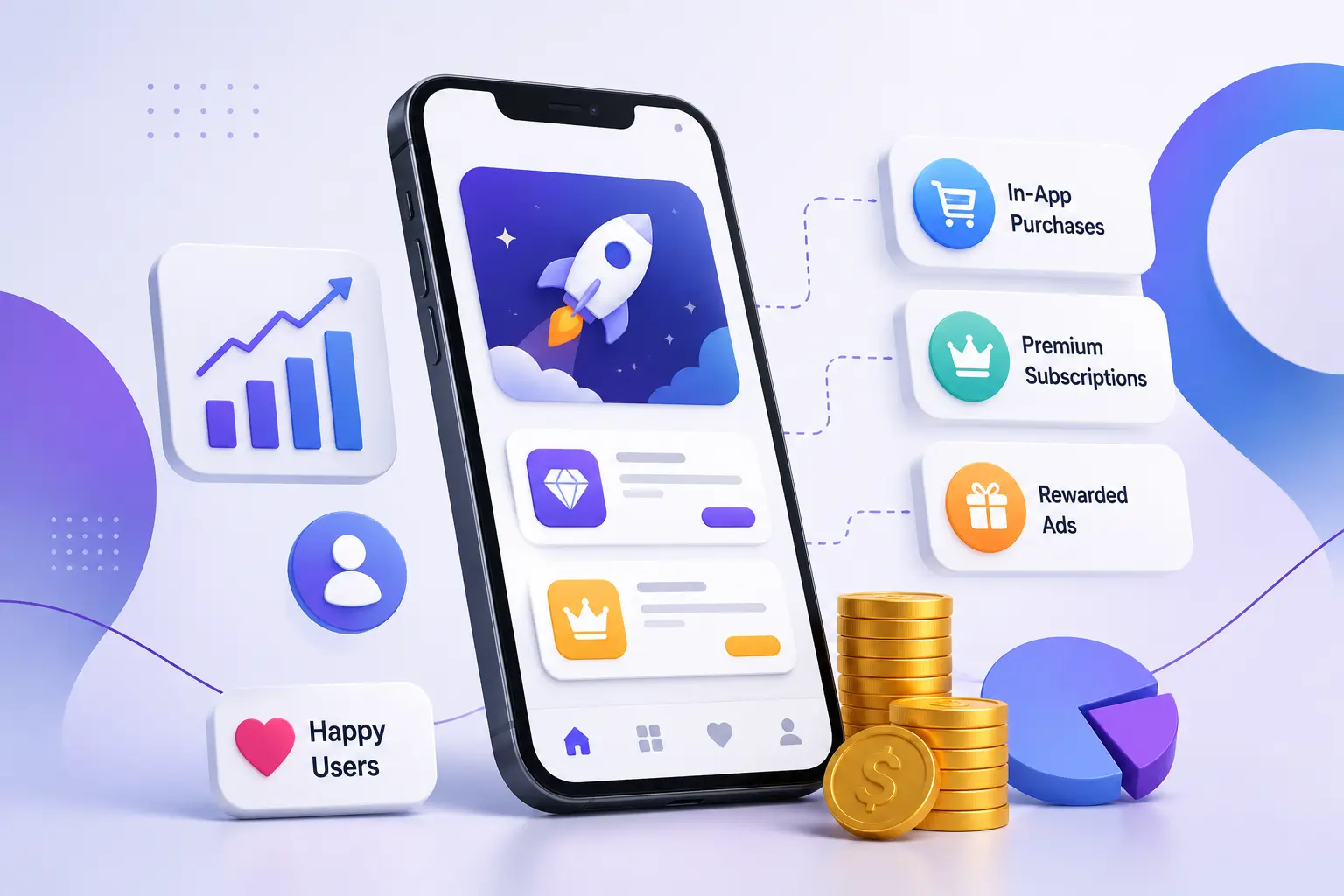
Most apps that fail to generate revenue don’t fail because the product is bad. They fail because the monetization was bolted on as an afterthought. Users notice when revenue extraction takes priority over experience and they leave. The apps generating consistent revenue in 2025 are the ones where the business model and the product feel designed together.
Understand The Model Before Picking A Method
The category of app monetization models has expanded well beyond ads and one-time purchases. Subscriptions. Consumables. Licensing. Affiliate revenue. Data products. The list has grown and each one sits differently depending on how often users return and what they’re actually doing when they do. An app people open once a week needs a different answer to one people open six times a day. Picking a method before understanding which model fits the product is where most developers go wrong. Method is a tactic. Model is strategy.
Freemium Still Works When The Line Is Drawn Right
The freemium vs paid apps debate has largely settled in freemium’s favour for consumer-facing products. Free access removes the barrier to acquisition. The conversion to paid happens when the free experience is genuinely useful but limited in a way the user actually feels. That last part is where most freemium implementations fail. Limits that feel arbitrary push users out. Limits that feel natural to the product pull them toward paying.
Paid upfront still works in productivity tools and professional software where the download is a considered decision. That decision belongs to the product, not the spreadsheet.
In-App Purchases And The Patience They Require
Good in-app purchases strategy isn’t built around what the developer wants to sell. It’s built around what users actually reach for. Consumables suit apps with ongoing loops. Permanent unlocks suit tools where owning something outright matters. Cosmetics work when the app is tied to identity. Same product, different purchase psychology entirely.
IAP revenue takes time. Users need to reach the point where a purchase feels natural before the offer appears. Surfacing it too early loses users who would have paid.
Keeping Revenue And Experience On The Same Side
The concept of user-friendly monetization sounds obvious but the execution separates the apps users recommend from the ones they delete. Ads that interrupt at high-friction moments, paywalls that appear before value has been demonstrated, subscriptions with no clear cancellation path. These aren’t design oversights. They’re decisions that prioritise short-term revenue over user trust. Users who feel respected by an app’s business model spend more over their lifetime.
What The Top-Performing Apps Are Doing
Studying mobile app monetization strategies in 2025 reveals less variety than expected. The highest-grossing apps aren’t doing anything exotic. Heavy users go onto subscriptions. Casual users see ads or buy consumables occasionally. New users get free access with minimal friction. The revenue isn’t coming from one clever mechanism. It’s coming from several ordinary ones aimed at the right people.
Following mobile monetization best practices means testing everything. Price points that convert in one category fall flat in another. A paywall that works in a fitness app would empty a finance app. Monetization decisions that never get revisited tend to calcify. What converted users twelve months ago may be the thing driving churn now. Treating pricing and offer design as live variables rather than launch decisions is what keeps a revenue model from going stale.
The Number That Actually Matters
Revenue per download is the number most app developers in UAE watch. Lifetime value per user is the one that determines whether the app is actually a business. The difference between the two is retention. Short-term extraction looks good on a weekly report. It tends to look different on a quarterly one when the churn numbers arrive. The apps that have held their user base longest are almost always the ones that were careful about when and how they asked for money early on.
The apps that have figured this out treat the revenue model as part of the product rather than a layer on top of it. Pricing decisions go through the same review process as feature decisions. Offers get tested the same way onboarding flows do. The business model isn’t something that gets bolted on after the product is built. It gets built alongside it, adjusted when the data says to, and measured against user behaviour rather than against what the competition is charging.