
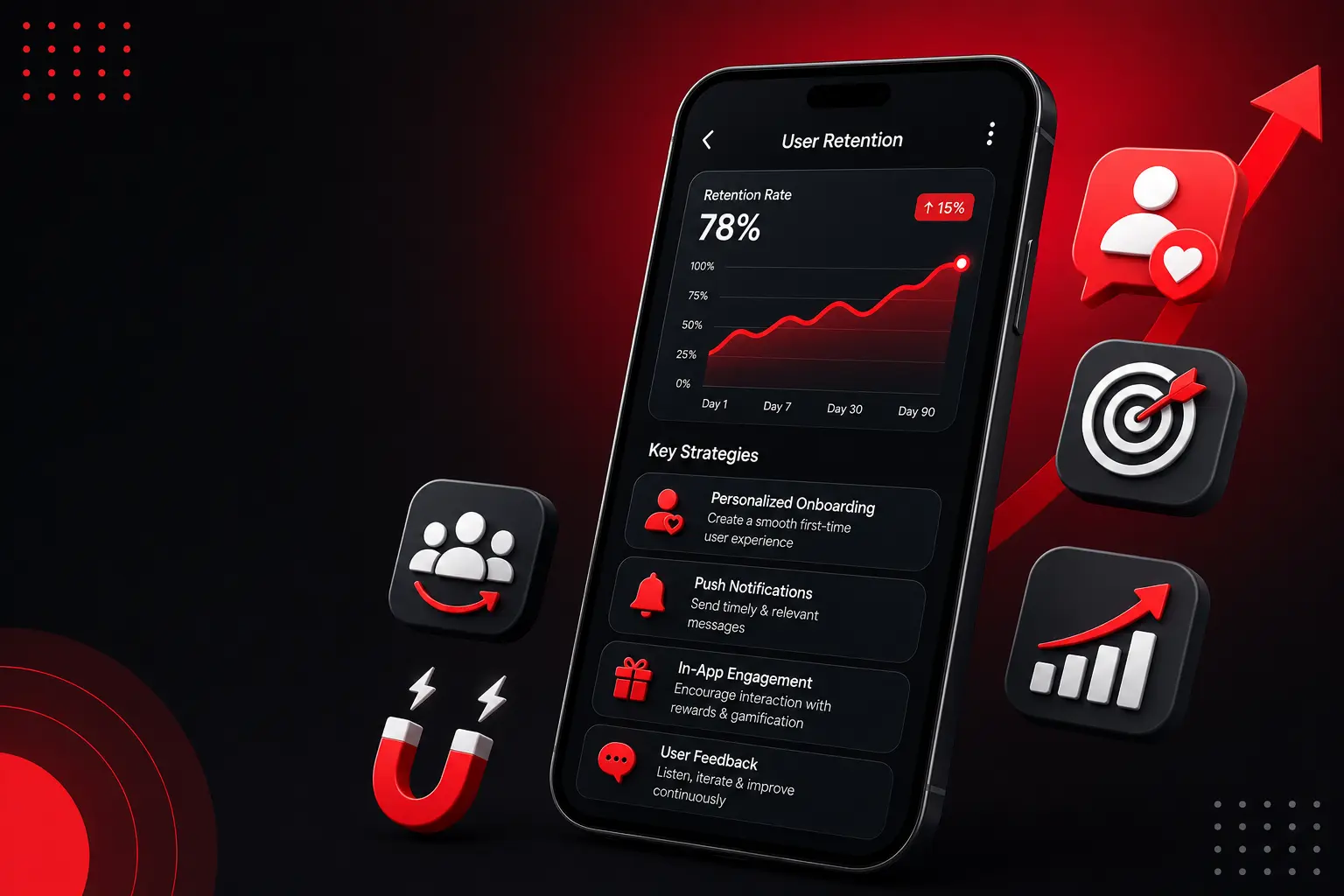
From the moment your app gets a first download to the point you have plenty, it’s a milestone achieved. But getting them to continue using your app, however, is a different story. Most apps lose a whopping 77% of their daily users in the first three days of use. Marketing your app becomes most effective, along with mobile app use retention, as the probability of increased profit margin increases for your app business.
A leaky bucket analogy describes the case when a large amount of money is spent on marketing to get user downloads, and as users begin to drop off rapidly, the marketing budget must be continuously refilled in order to meet user download goals, but without providing any profit. A way to remedy this is by generating a plan to develop user engagement and Funnel users once they have downloaded your app.
Why App Users Drop Off Early
Most people have very simple and predictable reasons for removing your app. By understanding these ‘pinch points’, you have some control over the failings of your user experience.
- Confusing or Lengthy Onboarding: People won’t spend time and effort filling in forms if your on-boarding process involves too many steps and lots of form filling. Your users want to be in, see how useful your app is, and achieve their first task in less than two minutes.
- Annoying or Unhelpful Notifications: Blasting people with promotions and random hour messages is spam and incredibly irritating. People see notifications that feel like spam and remove the app entirely and/or turn off notifications.
- App Crashes and Slow Load Times: Modern users don’t have time to deal with bugs. They do not care why an application crashed. They will uninstall your application and find a competitor that works.
- A Lack of Fresh Value or Reason to Return: If you do not give the user any reason to check your application, they will forget your application even exists. You can avoid this by being innovative.
Comparing Retention Tactics vs. Common Mistakes
User retention improves when extra effort is put into improving the usability of a product rather than when selling the product.
| Area | What Drives Users Away | What Keeps Users Coming Back |
| First Impression | Long forms, mandatory social logins, and no clear setup guide | Fast 3-step sign-up, interactive tours, and immediate value |
| Notifications | Generic, daily spam blasts sent at random hours | Relevant alerts based on user activity and preferred times |
| User Experience | One-size-fits-all menus and generic home screens | Personalized home screens showing recent activity or custom tips |
| Feedback & Support | Hidden help buttons and ignored App Store reviews | Easy in-app support chat and quick fixes for reported bugs |
Proven Ways to Keep App Users Engaged
Improving your app’s user retention does not equate to a complete product overhaul. Many effective app retention strategies are easy to implement across the user journey.
- Streamline the Initial Onboarding Process: Onboarding should not be a long drawn process. The user’s app onboarding should be complete in one step. Your user should be able to see the app’s service summary in one step.
- Build a Smart Push Notification Strategy: Notifications should provide value to the user e.g. reminders, updates, etc. You should not send marketing notifications to your user. The notification should be related to the user’s prior activity and should be sent when the user is most likely active e.g. news.
- Set Up Basic In-App Personalization: Modern users have outgrown home screens and expect apps to intelligently anticipate their preferences. Personalized recommendations and suggested content with in-app personalization greatly boosts the daily active usage. In-app personalization can memorize recent searches and suggest related items from pre-defined categories.
- Connect Email and In-App Messaging for Lifecycle Marketing: Quiet users must be re-engaged at multiple touchpoints before they completely churn. Gentle in-app pop-ups along with triggered re-engagement emails as part of your lifecycle marketing apps strategy helps win back lost users and incrementally engage users.
How to Spot and Fix Churn Early
When a customer leaves your app, you’ve lost them forever. The key to retaining customers is staying ahead of churn by keeping an eye out for little indicators. There are customers who don’t finish onboarding, opt out of notifications, and start logging in less frequently, among many others.
When these behaviors start showing up in your analytics, you should make changes to address it. You have no idea what can be causing your customers to stop using your app, so you’ve gotta make changes to see if it can be fixed. Simplifying a tricky menu, or rewriting a notification can be quick wins, and reduce app churn, without needing to spend money on ads to try and reacquire users.
Frequently Asked Questions
Why do many mobile apps struggle with user retention?
The answer is straightforward. Most companies throw everything at user acquisition and nothing at user retention. Slow loading apps, layers of menus to hide functionality, and zero unique value proposition are why users leak to the competition.
How can push notifications improve retention?
Push notifications are useful for bringing users back to a product when they provide real value. Custom notifications such as order status notifications, product recommendations, and timely reminders help a product from becoming an annoyance; instead, a product becomes a real-time value-added facilitator.
What metrics should businesses monitor for app retention?
The most important retention metrics to consider are Day 1, Day 7, and Day 30 retention rates. As well as Daily Active Users (DAU), Monthly Active User (MAU) rates, Churn Rate, Average Session Duration, and In-App Conversion Rates.
Building Long-Term App Success
App retention isn’t something that can be faked or achieved via marketing. Rather, reliability and ease of use along with value addition each day is what helps a user consider keeping your app on their phone. It is about reducing barriers to app engagement, personalized notifications, and listening to feedback to turn one time users into habitual users.