
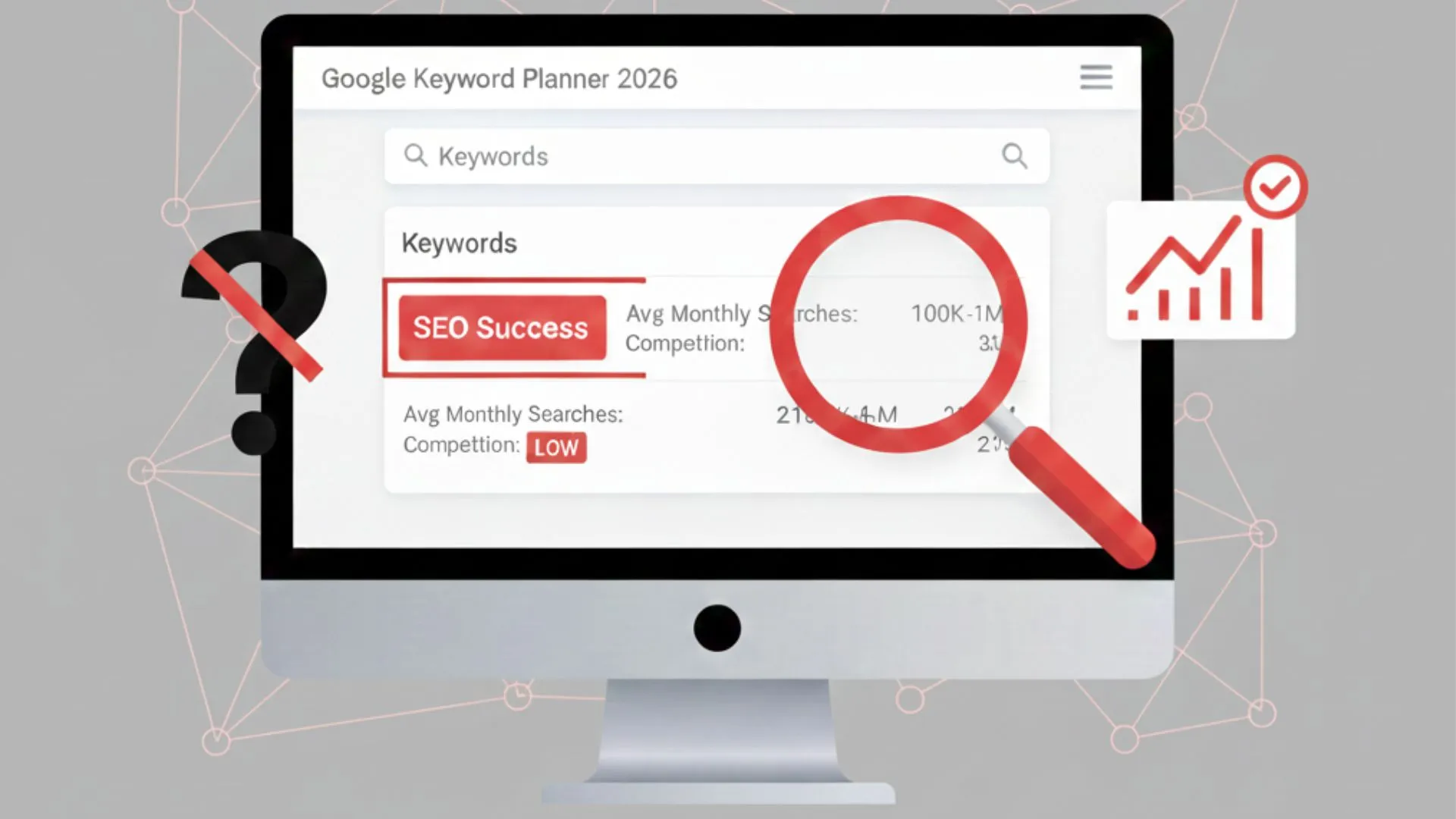
2026 is here, and the digital landscape in Dubai and the UAE as a whole is as busy as it has ever been. Having “related” terms is not enough to exceed expectations. This is the exact reason that a specialized guide is needed to cross the barrier between paid intent and organic visibility. While the majority of marketing individuals utilize the tool for basic ideation, it is actually capable of forecasting the demand for content and validating a topic’s potential commercial success.
Forward-Thinking Strategies for Keyword Planning
A keyword stratification style defined by “intent clusters” instead of standalone phrases is one of the defining keyword planning tips for 2026. Leveraging the “Start with a Website” function allows you to reverse-engineer the SEO of any of your competitors to discover the exact keywords Google connects with their top-ranking URLs.
Advanced SEO Power User Strategies:
- Expert Mode Activated: Make sure you’re in “Expert Mode” for detailed filtering. Otherwise, your search volume analysis range will be stuck in a broad, useless range.
- Zero-Click Filter: Examine the keyword monetary worth by the “top of page bid” ranges. If the bid is higher, that is an indicator that the traffic, regardless of organic, is highly convertible.
- Competitor Dissection: Input a competitor’s landing page URL into the “Start with a Website” field. This shows you the semantic keywords Google associates with that particular authority.
- Tracking Seasonality: Emerging trends that stem from the UAE market, such as spikes in luxury retail or seasonal tourism, can be identified with the “Three-Month Change” metric.
Technical Breakdown: Search Volume Analysis
Identifying and analyzing the metrics behind search volume analysis can help develop a successful keyword strategy for SEO campaigns. In 2026, raw volume is less important than “Qualified Volume” metrics that bring in revenue. By comparing global and local metrics, you can make your content even more meaningful to the specific linguistic variations used in the Gulf region.
| Feature | SEO Application | Strategic Benefit |
| Refine Keywords | Separate by Brand vs. Non-Brand. | Hones your focus on the “Product” tier where queries have the highest intent. |
| Grouped Ideas | Identify theme clusters for “Hub & Spoke” content. | Enhances domain authority by covering a subject in more detail. |
| Negative Keywords | Exclude terms related to “Free” or “Job”. | Safeguards your data against irrelevant, low-intent traffic. |
| Historical Metrics | Use 12-month trends for evergreen planning. | Stops you from investing in “fading” trends or one-hit wonders. |
Building a Bulletproof Keyword Strategy for SEO
After obtaining results in the Google Keyword Planner, the last stage is integration. Export the results to a main document and allocate each keyword to a particular point in the buyer’s journey. Market sophistication in the UAE is at the highest level, and a one-size-fits-all template is bound to fail. It will be essential to differentiate between the “informational” search in Sharjah and the “transactional” buyer in the Dubai Marina.
Conclusions
When it comes to PPC data analysis, mastering Google Keyword Planner is simply being able to identify organic streams of data. What you learn in this Google Keyword Planner guide should help steer data obtained from a simple tool into a more sophisticated strategy. Whatever your Keyword Strategy for SEO is, when it’s based on real Google data, making your way to the top of the SERPs is just a matter of doing the work, not just making a best guess.
Want to find the high-value keywords your competitors are losing out on? Contact RedBerries, the best Digital Marketing Agency Dubai, to get a complete keyword audit and strategic plan!