
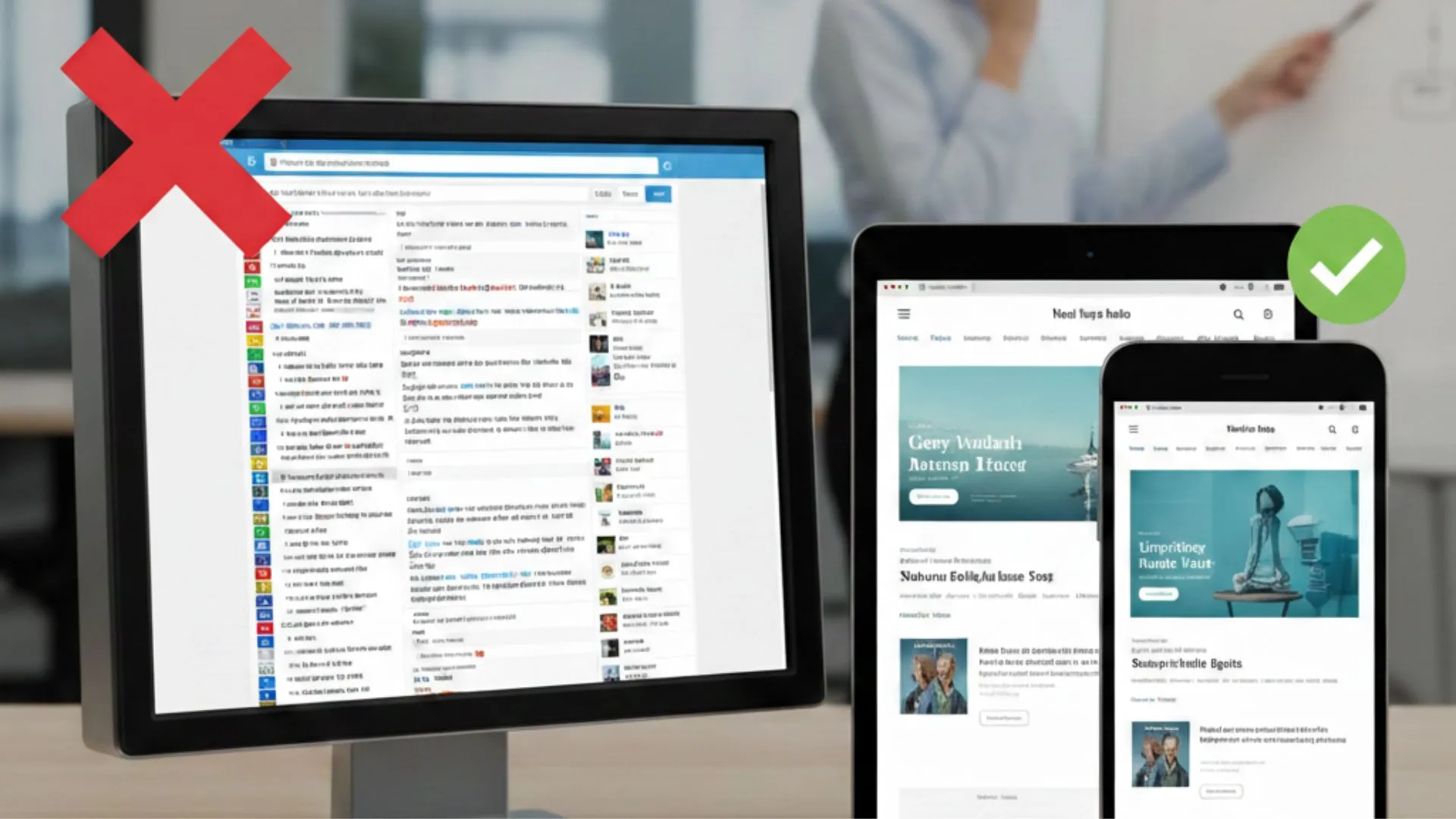
The Tipping Point: Recognizing Critical Website Redesign Signs
Many business owners see a business website as a one and done project but in an ever-evolving market like the UAE, what was once a leading website design 3 years ago, is now an outdated website. Restarting the clock on the business website design is dangerous, so keeping an eye on the essential website redesign signs is necessary. It is not just about the new look; it is about answering the question, is your website an asset to your business or a relic? If you are avoiding sharing your website with high priority customers, or your marketing team is unable to do their work because the website backend is a complete mess, you have been warned. In the world as we know it now, a website needs to be as flexible as the business goals and the user needs, while being part of an evolving system.
Red Flags in the Data: Common Outdated Website Indicators
When sales drop, it is reasonable to expect problems. However, your analytics may quietly reveal problems long before your revenue stream evaporates. If your website is stuck in the 5G cycle, it’s likely your website doesn’t have the intellectual structural capacity to cope with the modern user search/browsing cycle. In 2026, expectations are high. Furthermore, modern search engines penalize sites that fail to meet modern standards. Here are common outdated website indicators.
- The “Three-Second” Abandonment Rule: After data analysis, it is found that 53% of mobile users will leave a page that takes longer than three seconds to fully load. If a website is slow to load on a 4G or 5G connection, it is more than just an annoyance, it is a closed door trying to keep potential customers out. Problems such as a site that is in need of a legacy CMS that can be fully optimized are often the result of unoptimized images and blocked codes.
- Inconsistent Branding and Messaging: Websites need to be maintained to adapt to the growth of the company. If a site has outperformed products, a business has outperformed that brand voice, a site needs to be updated to jive with the updated offerings that the business has expanded into.
- High Bounce Rates vs. Industry Medians: High bounce rates are troublesome for any website. More than seven out of ten users leaving after one page view means your site likely failed to engage them. It usually indicates a ‘visual mismatch’ scenario, where the user feels the site is untrustworthy or outdated enough to justify their time.
| Indicator | Signal Type | Business Impact |
| Slow Load Times | Technical | High bounce rates and lower Google rankings. |
| Non-Responsive Layout | Mobile | Lost leads from users on-the-go (60%+ of UAE traffic). |
| Cluttered Navigation | UX | Users can’t find what they need, leading to frustration. |
| “Stale” Visuals | Aesthetic | Eroded trust and a perceived lack of professionalism. |
The Silent Sales Killer: Identifying Website UX Issues
The most dangerous problems are often the ones you can’t see on the surface. Severe website UX issues are friction points that stop a user from completing a purchase or submitting a form. Consider a ‘Request a Quote’ form that has 12 fields and is not mobile-friendly. This is how you turn away business. Modern UX (User Experience) is ‘Intent-First’ design – a business that removes every single roadblock from a user’s question to the answer.
When you need a developer for a little text change on your site or your site navigation isn’t highway, but a maze, that’s what we call ‘Technical Debt’. This is where a website designing agency in Dubai comes into play. Not only a professional redesign is more about how it looks, rather, it is about remodeling and redefining how you simplify ‘Buyer’s Journey’. When you solve UX bottlenecks like a confusing menu, or no ‘Dark Mode’ option, you provide a seamless experience and guide users to convert. A redesign is ultimately an investment in your sales team’s success.