
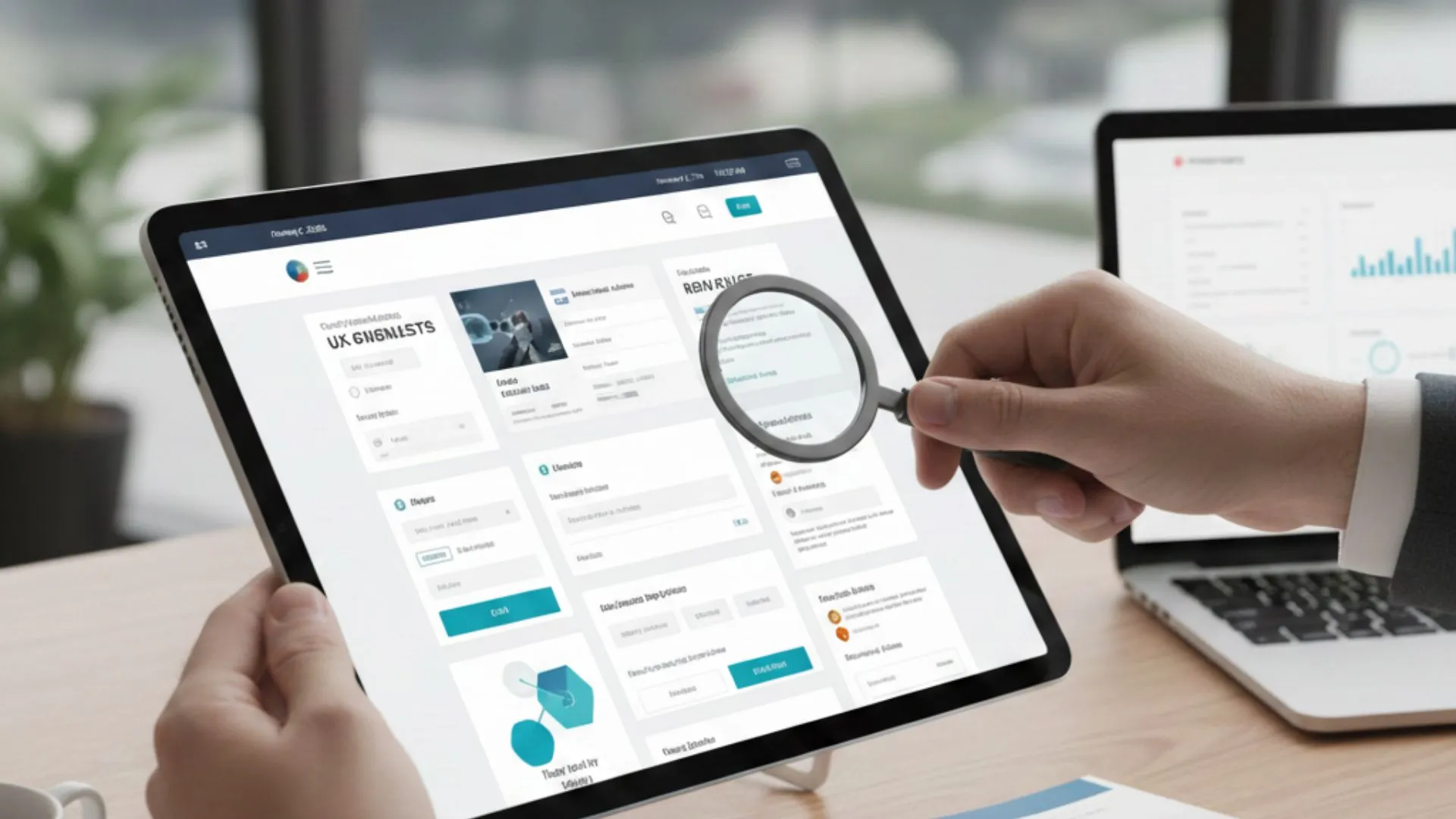
The Foundations of a Modern Website UX Evaluation
Considering how quickly the digital world is changing, in 2026, a website UX evaluation should be comprehensive, data-driven, and far beyond just a simplistic visual inspection. Your digital presence has the greatest stakes it’s ever had, with 88 percent of consumers stating they will not return for another visit after a poor encounter. It is not just about correcting “bugs”; it is about “friction.” These are the subtle indicators that a potential customer will lose interest and leave the website to go to a competitor.
An evaluation will start at user and business intersections. While working with a website design company, one will tell you good design is often invisible and helps direct users towards a business goal without them having to think too much. Understanding a site’s performance goes beyond aesthetics. One must examine the website UX metrics, which include task success rate, time on a page, and second-click metrics. These help in establishing the benchmarks to measure the ROI on the design changes one is making.
Complete UX Audit Checklist for 2026
Any evaluation needs structured steps. This UX audit checklist covers the main pillars in 2026 which are vital for both users and search engines:
- Mobile First Design: Does the site feel like a mobile site? Is it responsive? Check the spacing of tappable targets to make sure it’s at least 48px. Are font sizes legible without zooming? Are all important actions reachable for the user’s thumb?
- Accessibility: Roast the site on the accessibility checker and ensure WCAG 2.2 is followed. Check that all interactive elements are keyboard accessible and navigable.
- Information Architecture: Can a new user find your core service or product within two clicks? Test if your menu labels make sense using “Tree Testing.”
- Trust & Clarity: Look for “Dark Patterns.” These are pre-checked boxes, hidden fees, etc. By 2026, transparency is a critical component of conversion optimization UX.
- Visual Stability: As elements load, no layout shifts should occur. A stable page builds user confidence. A jumpy page creates immediate frustration.
Leveraging Behavioral Data: Heatmaps and Session Recordings
While quantitative analytics data tell you what is happening, qualitatively focused behavioral analytics data tell you why. Heatmaps and session recordings are two of the most powerful behavioral analytics tools used by modern UX professionals to analyze the hidden struggles of visitors.
With a heatmap, you can see all the places people are clicking. If people are clicking on unclickable items, that is a clear sign of confusion. Session recordings allow you to see the entire journey of a user. You can find areas where users scroll past important information or where they get “rage clicks” on a button that takes too long to load. Seeing the site from the view of a customer is what makes heatmaps and session recordings so valuable and is the main reason they function so well for conversion optimization UX.
Usability Testing Methods for 2026
The most important step in your evaluation is in-person engagement. While AI tools can make predictions about people, there is no substitute for traditional usability testing methods.
- Moderated Testing: Participating in video calls, a researcher views a user as they complete set objectives (e.g., “Find the shipping policy and add a medium blue shirt to your cart”). The researcher can inquire about the logic behind the user’s actions.
- Unmoderated Testing: This is a high-volume type of testing. Users record and narrate themselves as they move across your site. This is great for identifying smaller issues across browsers and devices.
- Five-Second Test: Show your homepage to a user for five seconds and record what they think the company does. Unless they answer correctly, your score for “Clarity” is too low.
- A/B Testing: After getting a hypothesis (e.g., “A green button will convert better than a red one”), conduct a A/B testing and let the data tell the story.
Incorporating these real-world user insights with your technical data gives us a picture of how your website truly performs. It’s the difference between wishing to know your customers’ needs versus determining precisely where they face challenges.
In 2026, the most successful brands within their niches will not be those with the largest launch budgets; they will be those who consider user experience design to be a fundamental component of their business. When a competitor builds a frictionless experience, the businesses who view their websites as a “set it and forget it” will leave themselves open to losing leads. The real winners stay curious – constantly testing, tweaking, and refining the journey to make sure every click feels effortless for the user.